Not because spreadsheets are bad.
In fact, they’re one of the most flexible business tools ever created.
The problem is that successful businesses often outgrow them.
What begins as a simple solution gradually becomes a mission-critical system managing customers, projects, inventory, reporting, finances, or operations.
That’s when the hidden costs begin to emerge.
The Spreadsheet Growth Cycle
It usually starts innocently.
One spreadsheet becomes two.
Then five.
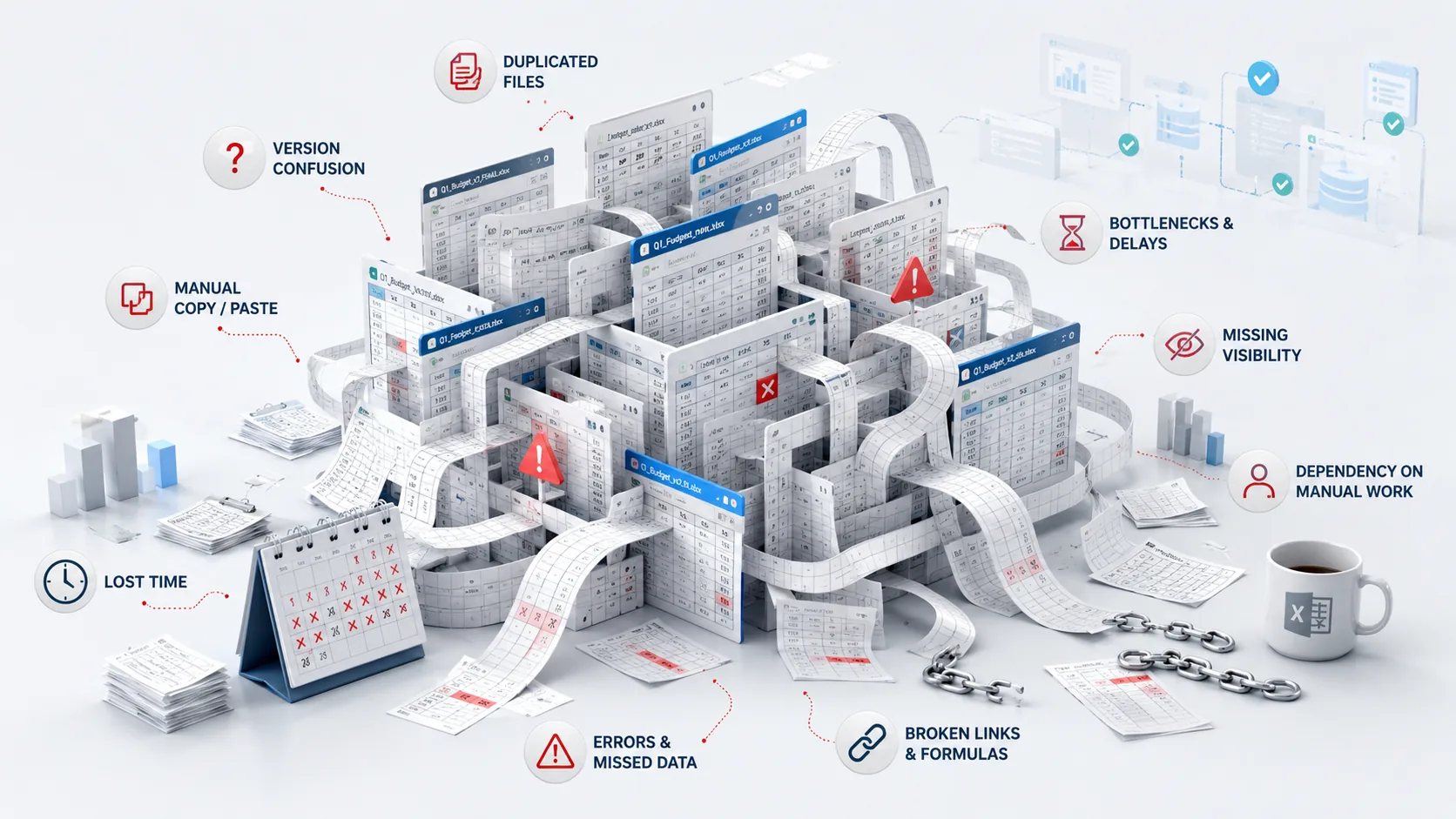
Eventually multiple team members are maintaining different versions, updating information manually, and relying on email attachments to share data.
Over time, the spreadsheet becomes the business process.
Unfortunately, spreadsheets weren’t designed for that purpose.
Version Control Becomes a Nightmare
One of the most common issues is uncertainty around which version is correct.
You may have:
- Multiple copies saved across computers
- Different team members making changes
- Outdated reports being referenced
- Critical information accidentally overwritten
When decisions are being made based on inconsistent data, mistakes become inevitable.
Manual Work Multiplies
Many businesses underestimate how much time is spent:
- Copying information between systems
- Updating reports
- Checking data accuracy
- Following up on missing information
- Correcting human errors
Individually these tasks seem minor.
Collectively they can consume dozens of hours every week.
Visibility Becomes Limited
As organisations grow, leaders need accurate, real-time information.
Spreadsheets often struggle to provide:
- Live reporting
- Audit trails
- User permissions
- Workflow management
- System integrations
Important decisions end up being made using incomplete or outdated information.
Signs You’ve Outgrown Spreadsheets
You may be ready for a custom solution if:
- Multiple people regularly edit the same spreadsheets
- Information exists in several locations
- Reporting requires significant manual effort
- Errors are becoming costly
- Processes depend on specific staff members
- Growth is creating operational bottlenecks
When Custom Software Makes Sense
Custom software isn’t always the answer.
For many businesses, off-the-shelf solutions are perfectly adequate.
However, when your processes are unique, your workflows are complex, or your team is spending significant time managing spreadsheets, purpose-built software can provide substantial operational improvements.
The goal isn’t to replace spreadsheets because they’re inconvenient.
The goal is to remove friction, improve visibility, and allow your team to focus on higher-value work.
Spreadsheets are excellent tools.
They’re just not always the right foundation for a growing business.


