Unfortunately, the answer isn’t always straightforward.
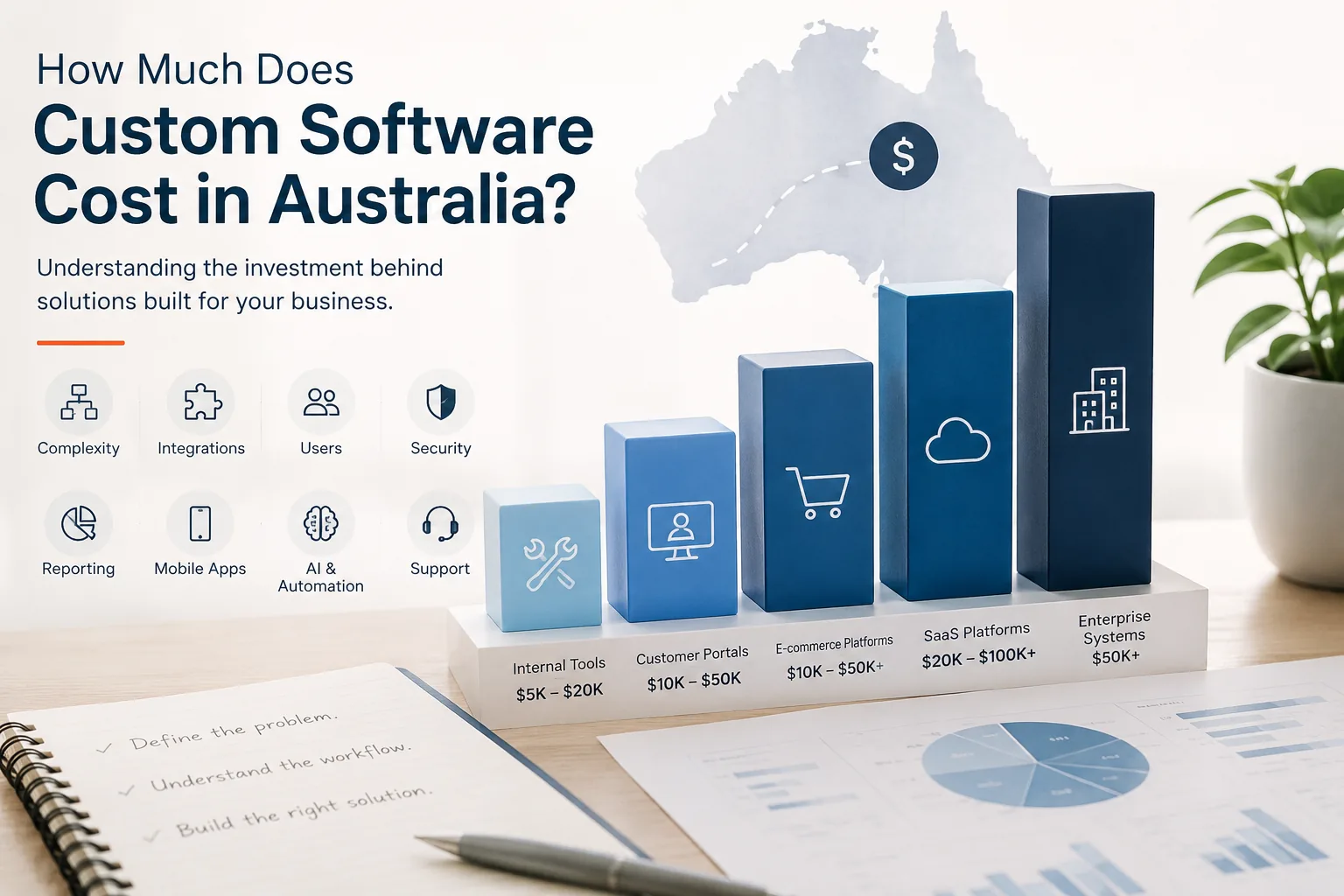
Custom software can range from a few thousand dollars for a simple internal tool to hundreds of thousands of dollars for a large enterprise platform.
The reason for this variation is simple: every business has different requirements, workflows, integrations and objectives.
However, understanding the factors that influence cost can help you determine whether custom software is the right investment for your business.
Why Custom Software Costs Vary
Unlike off-the-shelf software, custom software is designed specifically around your business processes.
Factors that influence project cost include:
- The complexity of the solution
- Number of users
- Required integrations
- Reporting requirements
- Security considerations
- Mobile app requirements
- AI or automation functionality
- Ongoing support requirements
Two projects may appear similar on the surface but differ significantly in complexity once the underlying business processes are examined.
Typical Project Investment Ranges
While every project is unique, the following ranges provide a general guide for Australian businesses.
Internal Business Tools
Examples:
- Workflow management systems
- Staff portals
- Approval systems
- Internal reporting platforms
Typical Investment:
$5,000 – $20,000
These projects are often focused on reducing manual administration, replacing spreadsheets and improving operational efficiency.
Customer Portals
Examples:
- Client self-service portals
- Booking systems
- Membership platforms
- Online application systems
Typical Investment:
$10,000 – $50,000
The final cost depends heavily on user management, workflow complexity and integration requirements.
E-commerce Platforms
Examples:
- Custom online stores
- Subscription services
- Product management systems
- Inventory integrations
Typical Investment:
$10,000 – $50,000+
Projects requiring integrations with accounting, inventory or ERP systems generally sit at the higher end of the range.
SaaS Platforms
Examples:
- Subscription-based software products
- Industry-specific business applications
- Multi-user cloud platforms
Typical Investment:
$20,000 – $100,000+
SaaS platforms often involve complex workflows, customer onboarding, payment systems and ongoing feature development.
Enterprise Systems
Examples:
- Multi-department business platforms
- Large-scale operational systems
- Custom CRM or ERP solutions
- Industry-specific management systems
Typical Investment:
$50,000+
These projects typically involve multiple user groups, advanced reporting, integrations and significant business process automation.
What Drives Costs Higher?
The biggest factors that increase project costs are usually:
Complex Workflows
The more business rules, approvals and exceptions that need to be handled, the more development effort is required.
Third-Party Integrations
Connecting with accounting systems, payment gateways, CRMs, inventory systems and external APIs often adds complexity.
Mobile Applications
Supporting both iOS and Android applications alongside a web platform increases development and testing requirements.
Custom Reporting
Advanced dashboards, analytics and reporting systems can require significant planning and development.
AI Integration
AI can provide substantial business value, but it also introduces additional technical considerations around data, security and ongoing costs.
Is Custom Software Worth It?
For many businesses, off-the-shelf software is the right choice.
However, custom software becomes worthwhile when:
- Existing systems don’t support your workflow
- Staff spend significant time on manual processes
- Multiple systems need to work together
- Operational inefficiencies are limiting growth
- Competitive advantages can be created through technology
The goal isn’t simply to build software.
The goal is to solve business problems, improve efficiency and create long-term value.
Start With The Problem, Not The Budget
The most successful software projects begin with a clear understanding of the business challenge rather than a predefined solution.
By understanding your goals, workflows and requirements, it’s possible to recommend the most practical and cost-effective approach—whether that’s custom software, off-the-shelf software, or a combination of both.
If you’re considering a software project and would like guidance on likely costs, we’re always happy to discuss your requirements and help you determine the best path forward.


